Délice Pistachios
Dried Damask Rose Buds
Dried Damask Rose Buds
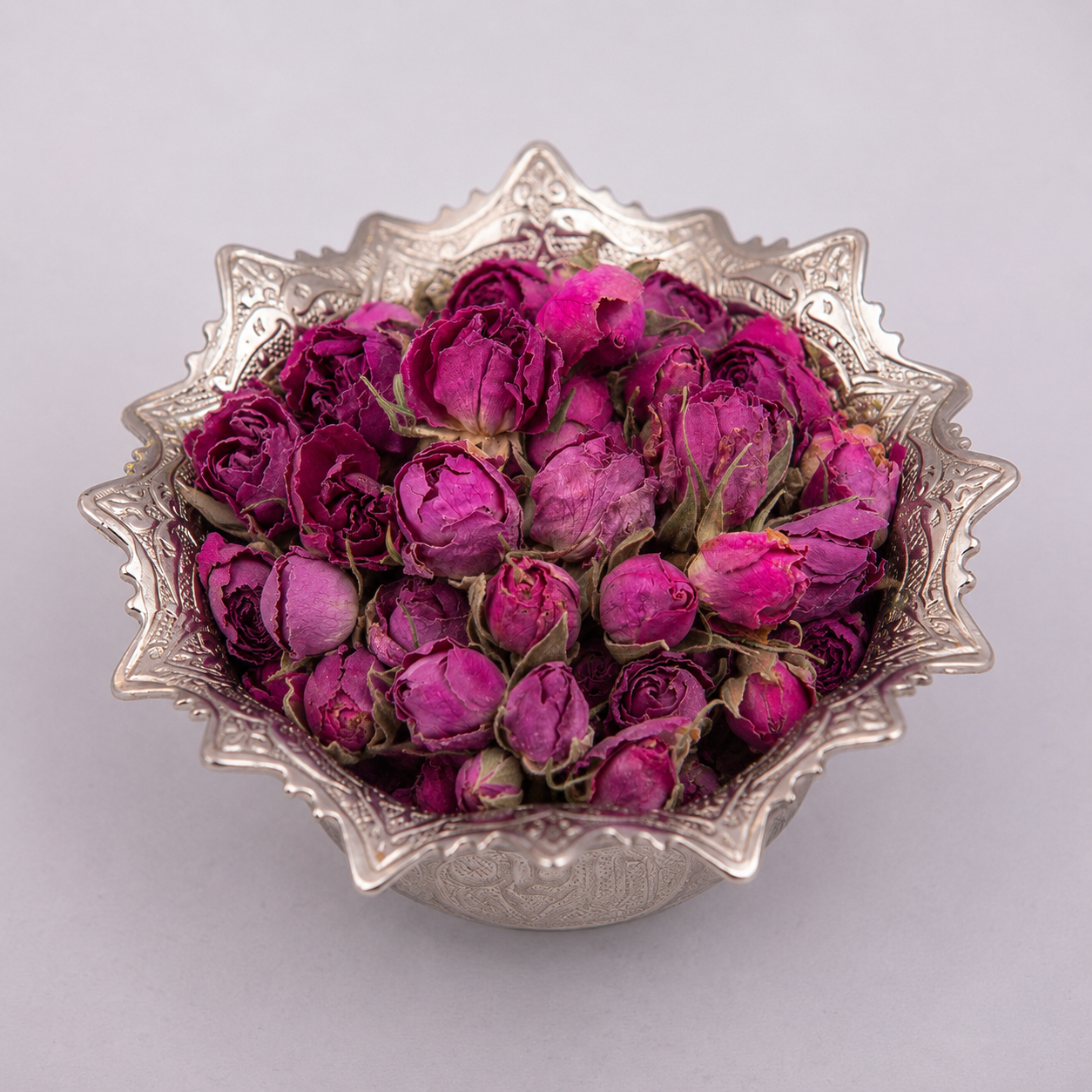
Whole Damask rose buds — Rosa damascena, the Iranian gol-e Mohammadi — grown in Tabriz and harvested before the flower opens, then dried with the calyx still attached. Supplied in bulk to tea blenders, distributors, food manufacturers and kitchens working at volume.
Picked by hand at dawn, dried slowly at low temperature, then sorted by hand so the buds arrive whole rather than crumbled. Food-grade, with no dyes, added fragrance or preservatives.
Why Tabriz
Tabriz sits at roughly 1,350 metres, with cold winters, dry summers and a wide gap between day and night temperatures. Roses grown at that altitude develop more slowly than those in the warmer central provinces, and slower development concentrates what ends up in the flower. It also produces a firmer, tighter bud — which is what allows it to survive drying, sorting, packing and a long freight leg without falling apart.
For a buyer, that last point is the commercial one. Bud integrity on arrival is the difference between a saleable product and a carton of loose petals.
Specification
- Botanical name: Rosa damascena
- Origin: Tabriz, East Azerbaijan, Iran
- Form: Whole buds, calyx intact, unopened
- Processing: Hand-picked, low-temperature dried, hand-sorted
- Composition: 100% dried Damask rose buds. No dyes, fragrance, preservatives or additives.
- Grade: Food-grade, culinary and tea
- Packing: To requirement — food-grade lined cartons, food-service packs or retail-ready units
Who buys this
- Tea blenders and specialty tea brands. Whole buds as a single-flower tisane or as the visual component in a blend.
- Distributors and importers. Supplying pastry, hospitality and specialty grocery channels.
- Food manufacturers. Confectionery, bakery, dessert and beverage production.
- Hotel and restaurant groups. Tea service, dessert finishing and banqueting.
- Gift, hamper and wedding-favour producers. Where the whole flower is the product.
Applications
Whole-flower tea and tisane blends, where the bud opens in the cup and does the visual work unaided. Cake and dessert decoration, where it gives height and structure that scattered petals cannot. Infusion into syrups, honey and creams, with the advantage that a whole bud lifts out cleanly and needs no straining. Blended with green tea, black tea, cardamom, saffron or dried fruit.
A note on freight
Rose buds are low-density, so shipping is charged on volume rather than weight — the carton fills long before it gets heavy. This is worth planning for early, because it changes the economics of a small trial shipment considerably compared with a consolidated one.
Petals can be vacuum-compressed to recover some of that volume. Buds cannot: compression destroys the shape you are paying for, so they ship uncompressed and the freight cost reflects it. We would rather tell you that at the quotation stage than have it appear as a surprise on the invoice. Where volume justifies it, overland container routing recovers a meaningful part of the difference.
Requesting a quote
Pricing depends on volume, packing format, destination and shipping terms, so we quote rather than publish a figure. To get a useful answer in one message rather than four, include:
- Destination country and port or city
- Target volume — per shipment, and annually if you know it
- Preferred packing format, or tell us the channel and we will propose one
- Shipping terms you work on (ex-works, FOB, CIF)
- Whether you need private label or retail-ready packing
- Any documentation your market requires
Use the Bulk Order button below and we will come back with options.
Questions
What is the minimum order?
It depends on packing and destination. A consolidated shipment sharing space with other lines works very differently from a dedicated one, and rose is bulky enough that the answer changes with the format. Tell us your target volume and destination and we will tell you what is workable.
Can I get a sample first?
Yes. Samples are available for serious enquiries — tell us the market you are supplying and we will arrange it.
What documentation can you provide?
[CONFIRM BEFORE PUBLISHING — list the certifications and documents you actually hold: certificate of origin, phytosanitary certificate, lab analysis, health certificate, halal certification, and any others. This is the first question most importers ask and the answer needs to be exact.]
What is the lead time?
[CONFIRM BEFORE PUBLISHING — give an honest range from confirmed order to dispatch, and note that rose is a seasonal crop harvested in late spring, so availability and lead time move through the year.]
Do you supply the petals as well?
Yes. Dried Damask rose petals come from the same growers and the same harvest. Petals are the better choice where the flower will be scattered, blended or infused; buds where it needs to hold its shape or be served whole.
Is the green part meant to be there?
Yes — that is the calyx, and leaving it on is deliberate. It holds the bud together through drying, sorting and transit, and is the reason the flower arrives whole rather than as loose petals.
Will batches match across repeat orders?
Closely, not exactly. Colour and size shift with harvest and season, and nothing is added to standardise them. If you need a specification held across a season, tell us at the quotation stage and we will work to it.
Share