Délice Pistachios
Pistachio Powder
Pistachio Powder
Couldn't load pickup availability
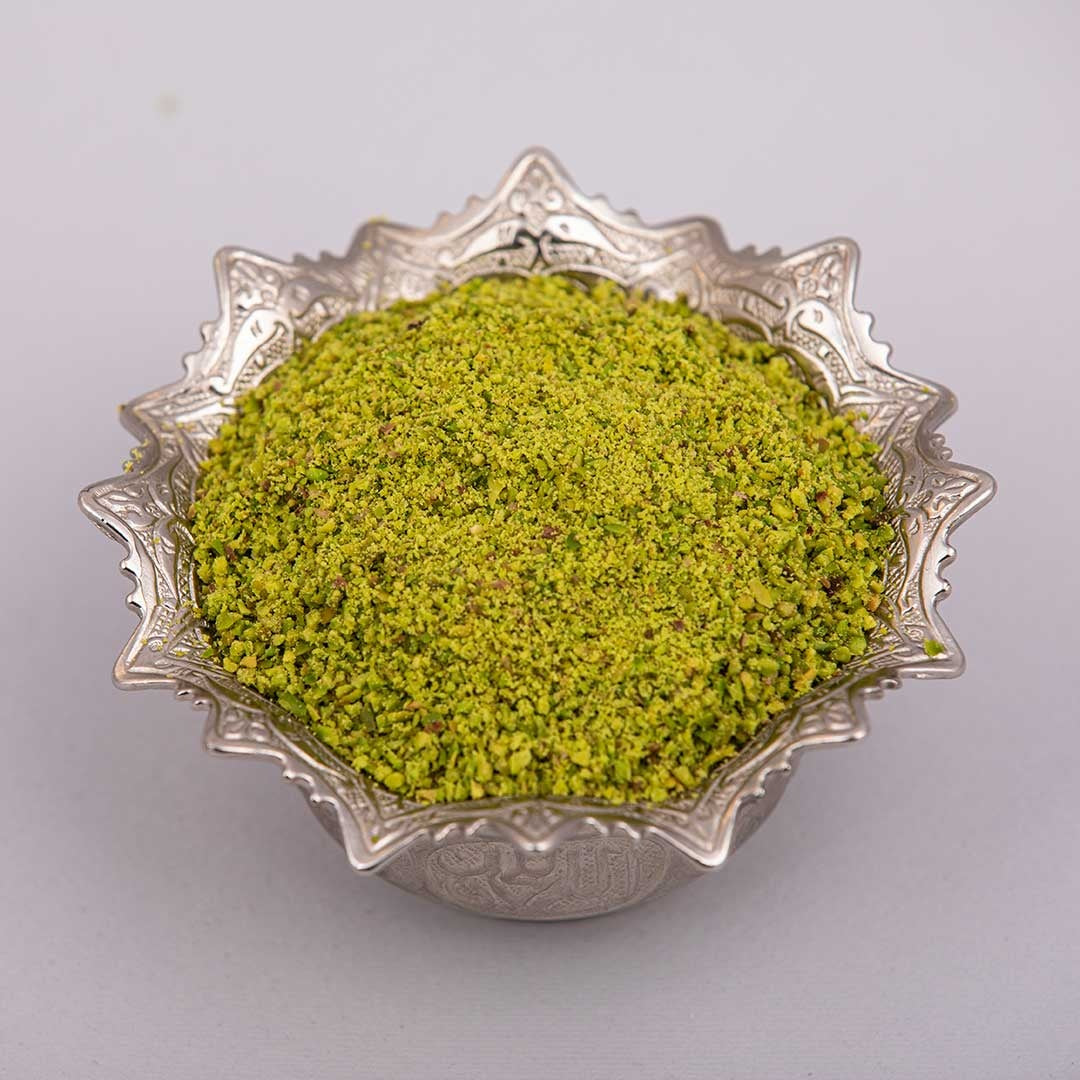
Peeled Iranian pistachio kernels milled to a fine powder. One ingredient, nothing else — no starch, no filler, no almond bulking it out, no colouring to make it look greener than it is.
This is the form that puts pistachio flavour through something rather than on top of it. Where kernels and slivers sit on the surface, powder goes into the crumb, the shell and the cream.
Character
Soft natural green — the shade of the nut itself, which is gentler than the pistachio green most people picture. It carries colour into pale batters and creams without any help. Flavour is concentrated and comes through cleanly, because there is nothing in the bag diluting it.
How to use
- Macarons. Substitute for part of the almond flour in the shell. Starting at 30–50% gives noticeable flavour and colour while keeping the shell structure predictable; push higher once you know how your recipe responds.
- Financiers and friands. Replace almond flour directly — one of the applications where full substitution works with the fewest adjustments.
- Frangipane and creams. Pistachio frangipane for tarts and galettes, or beaten into crème pâtissière and diplomat cream.
- Sponges and dacquoise. Folded into the dry ingredients for flavour and a soft green crumb.
- Praliné and paste. A base for making your own, blended with sugar or oil to your own specification.
- Finishing. Dusted over plated desserts, ice cream and chocolate work.
Which size?
A note before the numbers: powder is the fastest-turning product in the range, so buy the size you will get through rather than the best rate. Two 500 g packs bought a month apart will often give you better product than one kilo bought at once.
- 250 g. Three to five batches of macarons at a 50% almond substitution, or two to three batches of financiers at full substitution. Enough to test a recipe properly.
- 500 g. Seven to ten macaron batches, or five to six financier batches. Suits a small patisserie or a baker with pistachio built into more than one recipe.
- 1 kg. Fifteen to twenty macaron batches, or a full week of financier and frangipane production. Worth it only if the whole quantity will move inside a month or two.
Working notes
Pistachio is a high-fat nut, so the powder behaves like a nut flour rather than a grain flour. Expect it to compact in the pack and clump slightly — sieve before use and it disperses fine. Because of the fat, it will not keep at room temperature the way wheat flour does.
At a glance
- Origin: Iran
- Form: Finely milled from peeled kernels
- Ingredients: 100% pistachio kernels. Nothing added.
- Allergen: Tree nuts
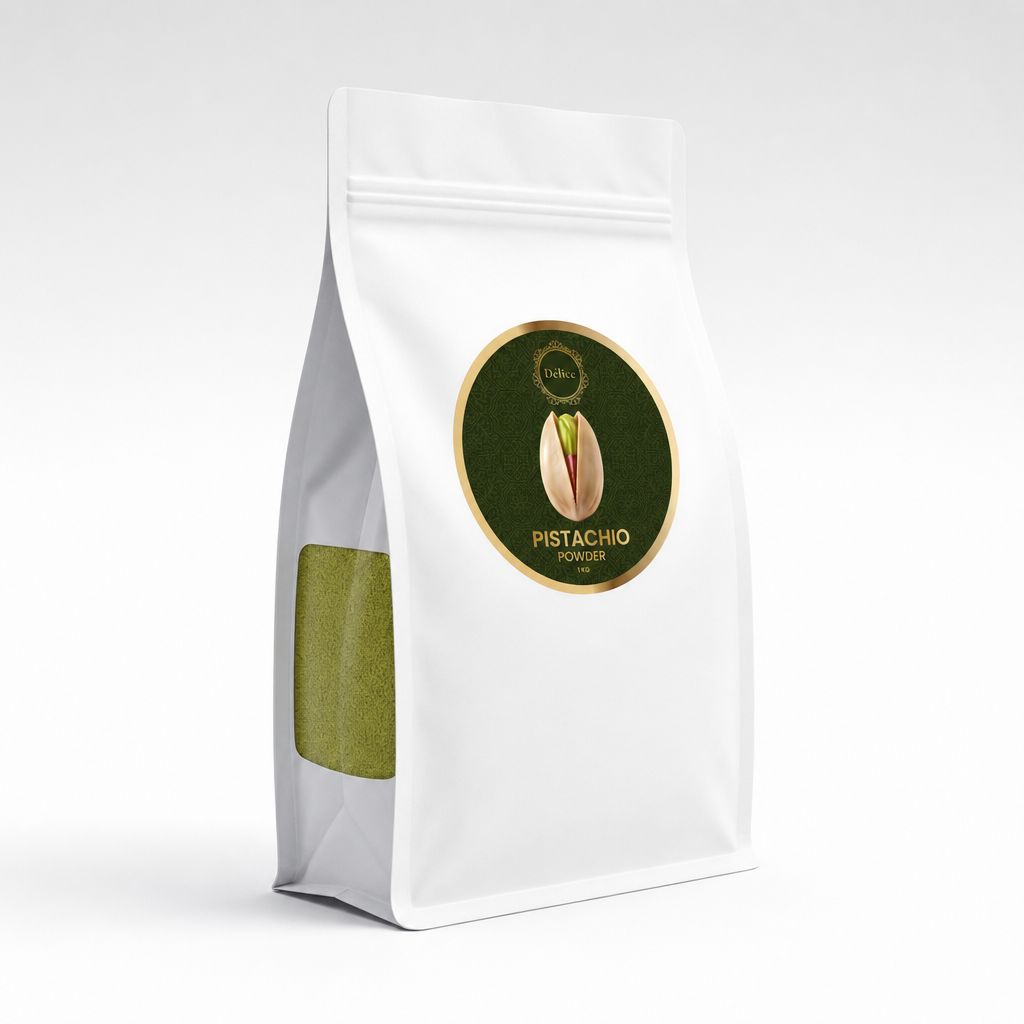
- Available in: 250 g, 500 g and 1 kg
Storage
Sealed and refrigerated is the honest recommendation. Of every form in the range this one has the most exposed surface and turns fastest, and rancid nut flour is unmistakable once it happens. Freezing works well for longer holds. At a kilo, portion on arrival, refrigerate the working container and freeze the reserve.
Questions
Why has it clumped in the pack?
Fat and pressure. It is normal for a pure nut flour and is not a fault — break it up and sieve it and it behaves exactly as it should. A powder that never clumps usually has an anti-caking agent in it.
Is this the same as pistachio flour?
Yes. The terms are used interchangeably. Both describe milled pistachio kernel with nothing added.
Why is it not bright green?
Because it is only pistachio. The vivid green in most commercial pistachio baking comes from added colour, usually alongside almond used as a bulking agent. This is the shade the nut actually is.
Share