Délice Pistachios
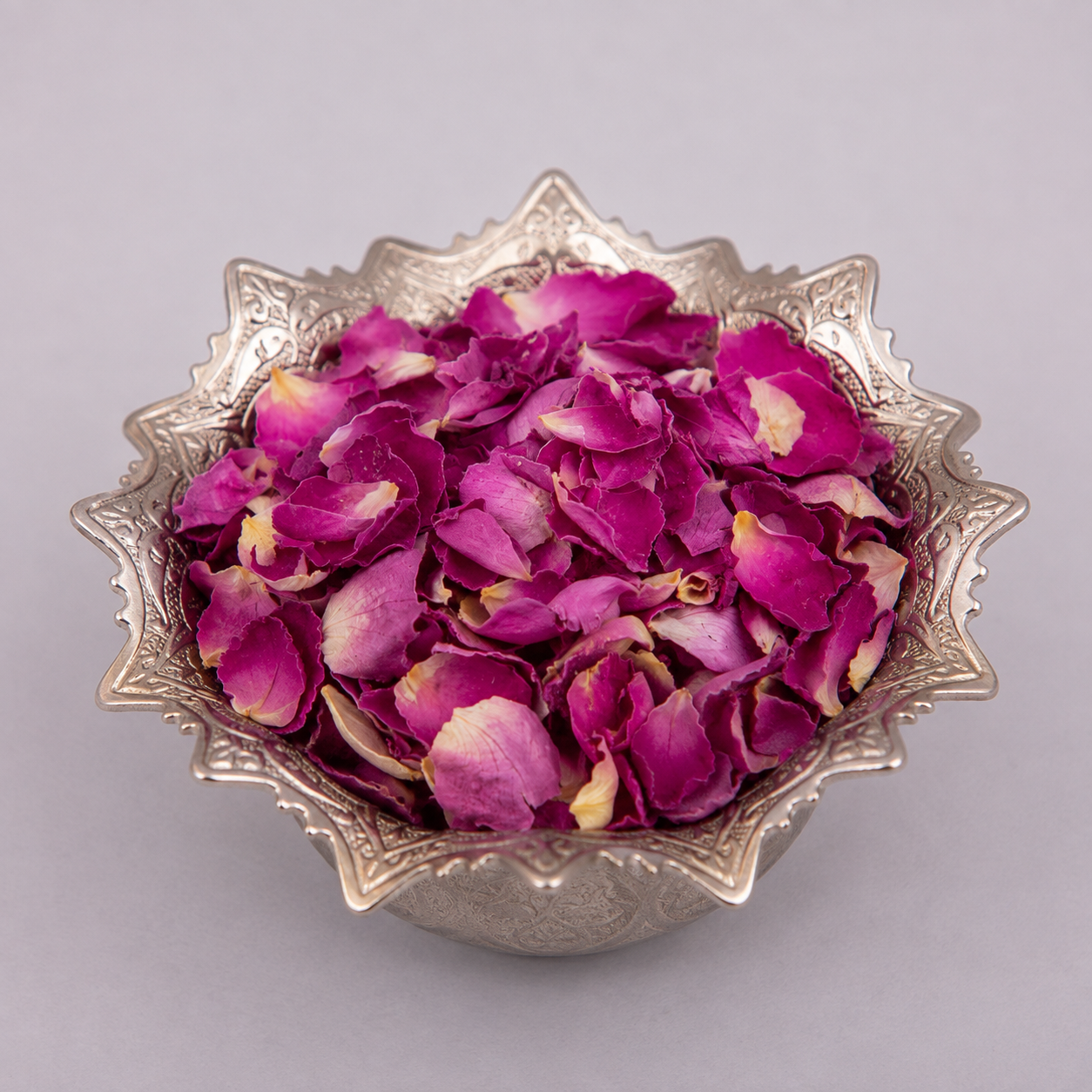
Dried Damask Rose Petals
Dried Damask Rose Petals
Couldn't load pickup availability
Damask rose — Rosa damascena, known in Iran as gol-e Mohammadi — is the rose grown for perfume and for the kitchen. Ours comes from Tabriz, in the northwest of the country, picked by hand at dawn when the oil held in the petal is at its highest and dried slowly at low temperature so the colour stays deep and the perfume stays in the petal rather than escaping into the air.
These are culinary rose petals. Food-grade, hand-sorted, with no dyes, added fragrance or preservatives. Not potpourri.
Why Tabriz
Tabriz sits at roughly 1,350 metres, with cold winters, dry summers and a wide gap between day and night temperatures. Roses grown at that altitude develop more slowly than those in the warmer central provinces, and slower development concentrates what ends up in the petal. The season runs later here than in Kashan, and the flowers come off the bush denser in aroma for it.
Flavour and aroma
Floral and honeyed, with a light astringency on the finish that keeps it from turning cloying. The aroma is closer to a fresh rose than to rosewater — softer, rounder, without the soapy edge distilled rose can bring. It lifts the moment it meets heat or fat, which is why infusion works so well.
How to use
- Finishing and garnish. Scatter over entremets, tarts, panna cotta, ice cream and chocolate work. Add after plating — sitting on a wet surface will soften the petal within minutes.
- Infusion. Warm into cream or milk, steep 20–30 minutes off the heat, then strain, for ganache, crème anglaise, pastry cream and gelato bases.
- Rose sugar. Blitz petals with caster sugar and sieve. Keeps for months and carries into shortbread, macaron shells and meringue.
- Syrups and drinks. Steep into simple syrup for cocktails, lemonade, faloodeh and iced tea.
- Tea. Blend with green tea, black tea or cardamom, or steep on its own as a tisane.
- Persian and Levantine classics. Sholeh zard, ranginak, baklava, halva, muhallebi and Persian love cake.
Pairs with
Pistachio above all — the two have been served together for centuries and neither overwhelms the other. Also cardamom, saffron, honey, white chocolate, raspberry, almond, lychee and citrus.
At a glance
- Botanical name: Rosa damascena
- Origin: Tabriz, East Azerbaijan, Iran
- Form: Loose whole and near-whole petals
- Processing: Hand-picked, low-temperature dried, hand-sorted
- Ingredients: 100% dried Damask rose petals. Nothing added.
- Grade: Food-grade, culinary
- Available in: 100 g
Storage
Keep in an airtight container in a cool, dark, dry place. Light fades the colour and humidity is the enemy of both crispness and aroma — worth taking seriously in a Malaysian kitchen. Stored properly, colour and perfume hold well beyond a year.
Questions
Are these safe to eat?
Yes. These are food-grade culinary rose petals, produced for the kitchen rather than for craft or decorative use. Decorative dried roses are frequently treated with dyes or fragrance oils and should never be used in food.
Is 100 g a lot?
More than most people expect. Dried petals are extremely light — 100 g fills a pouch that would otherwise hold a kilo of nuts. For garnish work a pinch finishes a plate, so a single pouch runs through a great many desserts.
Will the colour fade?
Slowly, and only with light exposure. Store away from direct sunlight and the deep magenta holds. Natural variation in shade between harvests is normal and is a sign the petals have not been dyed.
How much should I use?
Less than you would expect. Dried petals are very light, and rose becomes perfumed rather than pleasant if overdone. Start small and build.
Do you supply larger quantities?
Yes. For bulk and wholesale volumes, contact us directly and we will quote.
Share